The Wellness Trinity: Unlocking the Benefits of Lion’s Mane, Magnesium & Creatine.
Written by: Nicolaus Ng & Melissa Pateman
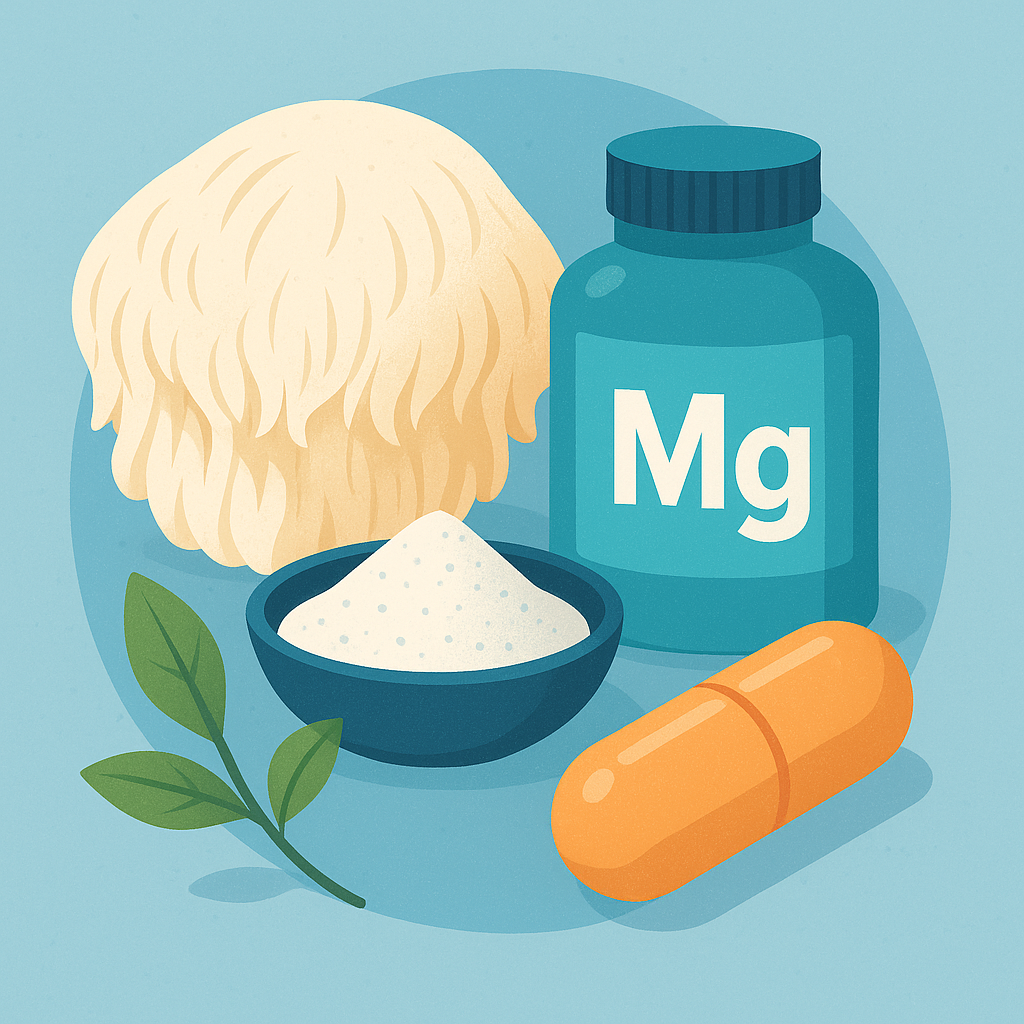
It’s hard not to notice when the same three supplements keep popping up – whether it's on wellness podcasts, in health blogs like this one, or even during casual chats: Lion’s Mane, Magnesium, and Creatine. They’re not just trending – they're making waves for good reason.
What’s interesting is that while these supplements are quite different, each brings something useful to the table – whether it’s for focus, sleep, mood, or long-term brain health. Let’s take a closer look at what they actually do and why so many people are talking about them.
Lion’s Mane: The Nootropic Mushroom for Brain and Mood
Lion’s Mane (Hericium Erinaceus) is a medicinal mushroom with centuries of use in traditional Chinese medicine. What makes it unique is its ability to stimulate the Nerve Growth Factor (NGF), essential for brain cell regeneration and neuroplasticity – particularly as we age.
What it’s known for:
- Supports memory, focus, and learning.
- Promotes regeneration of damaged nerves.
- Shows potential to reduce mild anxiety and depression.
Did you know?
Clinical studies suggest that Lion’s Mane can improve mild cognitive impairment and support mental clarity in aging adults (Saitsu et al., 2019). Its key compounds, hericenones and erinacines, can cross the blood brain barrier, a rare trait for natural nootropics.
Here at Move RX, we often recommend Lion’s Mane to clients looking for natural support with cognitive clarity, memory, or mood regulation – especially during times of stress or transition. It’s one of the few substances shown to stimulate myelin sheath production, the protective sheath around nerves, making it a fascinating option for long term brain health and neurodegenerative support.
Magnesium: The Mineral You Didn’t Know You Were Missing
Magnesium might not grab headlines like newer supplements, but it’s absolutely essential – involved in hundreds of functions throughout the body. From regulating your nervous system to helping muscles relax and support sleep, it's a true multitasker.
The challenge? Many people don’t get enough. Busy schedules, stress, and processed foods often leave us falling short – and symptoms like muscle cramps, fatigue, and poor sleep can sneak up without us realizing why.
What it’s known for:
Regulates Nerve and Muscle Function.
Improves Sleep and Reduces Insomnia.
Alleviates Stress and Supports Mood Balance.
Strengthen Bones, especially in Perimenopausal and Menopausal Women.
Did you know?
Recent Studies found that magnesium glycinate significantly improved sleep onset and quality in older adults with insomnia (Abbasi et al., 2023). Additional meta-analyses link magnesium intake with reduced symptoms of anxiety, especially in individuals with low baseline levels (Rawji et al., 2024) .
At Move RX, magnesium is one of our top foundational recommendations – particularly for patients dealing with muscle tightness, sleep issues, or general stress. We typically suggest magnesium glycinate as we often see meaningful improvements within weeks of consistent use.
Creatine: The Strength Supplement with Brain Benefits
Most people first hear about creatine in the context of gym performance – and yes, it’s excellent for that. But creatine has quietly become one of the most studied supplements for brain energy as well.
Your brain, just like your muscles, uses ATP as its energy source. Creating helps replenish that supply, which is essentially helpful when you're sleep deprived, mentally fatigued, or just a little foggy.
What it’s known for:
Enhance muscle strength and power.
Speeds recovery from exercise.
Improves short-term memory and focus.
May support mood in people with depression.
Did you know?
Emerging research highlights creatine’s ability to enhance cognitive performance, especially in sleep deprived individuals and aging adults. By replenishing ATP – the brain’s primary energy currency – it supports key areas involved in memory, focus, and decision making (Prokopidis et al., 2023)
At Move RX, we often introduce creatine as part of both performance and cognitive support plans – not just for athletes, but for students, shift workers, or anyone navigating high mental demands. It’s safe, well researched, and often underestimated its benefits beyond the gym.
These supplements aren’t cure all, but they each bring something useful to the table, depending on what your body might be asking for. Maybe it’s sharper focus, better sleep, or just feeling a bit more balanced day to day. It’s no surprise they’re showing up in more routines – not as trends, but as tools people are actually benefiting from.
Of course, everyone's needs are different. If you’re thinking about trying something new, it's always worth checking in with a healthcare provider. But if any of this sparked your curiosity, it might be a great starting point to explore what works best for you.
Saitsu Y;Nishide A;Kikushima K;Shimizu K;Ohnuki K; (2019). Improvement of cognitive functions by oral intake of Hericium Erinaceus. Biomedical research (Tokyo, Japan). https://pubmed.ncbi.nlm.nih.gov/31413233/
Abbasi B;Kimiagar M;Sadeghniiat K;Shirazi MM;Hedayati M;Rashidkhani B; (2023). The effect of magnesium supplementation on primary insomnia in elderly: A double-blind placebo-controlled clinical trial. Journal of research in medical sciences : the official journal of Isfahan University of Medical Sciences. https://pubmed.ncbi.nlm.nih.gov/23853635/
Prokopidis K;Giannos P;Triantafyllidis KK;Kechagias KS;Forbes SC;Candow DG; (2024). Effects of creatine supplementation on memory in healthy individuals: A systematic review and meta-analysis of randomized controlled trials. Nutrition reviews. https://pubmed.ncbi.nlm.nih.gov/35984306/
Rawji A;Peltier MR;Mourtzanakis K;Awan S;Rana J;Pothen NJ;Afzal S; (2023). Examining the effects of supplemental magnesium on self-reported anxiety and sleep quality: A systematic review. Cureus. https://pubmed.ncbi.nlm.nih.gov/38817505/