Creatine for Your Brain: What the Latest Research Means for High-Performance Movement & Rehab
Written by: Dr. Christine Col
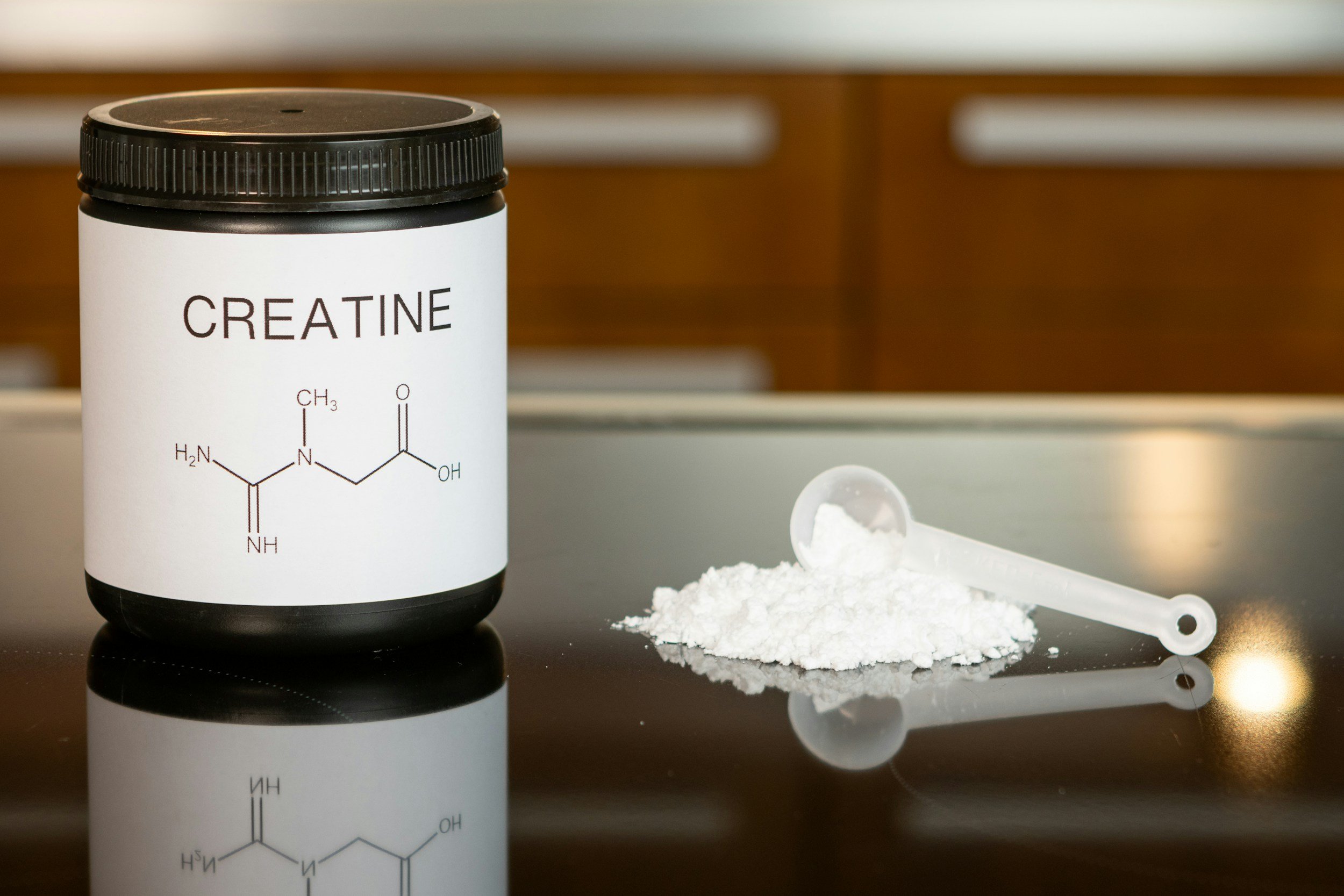
When most people think of creatine, they picture muscle gains, barbell PRs, and better gym performance.
But here’s what might surprise you: creatine doesn’t just fuel your muscles — it fuels your brain.
Recent research published in Nutrients shows creatine plays a vital role in brain energy metabolism and may help support cognition, recovery from fatigue, mood regulation, and even brain injury recovery.
At Move RX, we’re all about bridging the gap between rehab and performance — and that includes how your brain drives your movement, focus, and resilience.
Let’s unpack what this means for you.
Why the Brain Needs Energy Like a Muscle
Your brain makes up only about 2% of your body weight… but it consumes 20% of your body’s total energy — even at rest.
Every thought, memory, and reaction depends on a constant supply of cellular energy called ATP (adenosine triphosphate).
That’s where creatine comes in.
Creatine helps regenerate ATP rapidly, allowing cells — including neurons — to perform efficiently under stress. Just like muscles rely on creatine during high-intensity training, your brain relies on it when you’re problem-solving, adapting, or recovering from fatigue.
In other words: creatine isn’t just a supplement for your squat PR — it’s fuel for your mental resilience.
What the Science Says
The 2022 review in Nutrients (“Effects of Creatine Supplementation on Brain Function and Health”) explored dozens of studies examining how creatine and its precursor, guanidinoacetic acid (GAA), impact brain health and performance.
Here’s the short version:
Creatine can increase brain creatine levels — but not as dramatically as in muscle.
Studies show increases from 3% to 15% in brain creatine and phosphocreatine (PCr) stores.
However, results are inconsistent — not everyone responds the same way.
The blood–brain barrier limits creatine uptake, and some brain regions may benefit more than others.
GAA might offer even greater increases in brain creatine.
Supplementing with GAA for 4 weeks increased brain creatine by up to 16% in certain regions.
Promising, but more research is needed to confirm safety and long-term effects.
Creatine supports cognition under stress.
In studies on sleep deprivation, older adults, and vegetarians (who have lower natural creatine stores), supplementation improved memory, reaction time, balance, and mood.
It seems especially useful when the brain’s energy demands are high — after long days, poor sleep, or intense training blocks.
It may have a role in brain injury and recovery.
In children recovering from traumatic brain injury (TBI), creatine reduced post-traumatic amnesia and hospital time.
Animal studies show neuroprotective effects after concussion or ischemic injury, likely by stabilizing mitochondria and reducing oxidative stress.
It may support mental health and mood.
Lower dietary creatine intake correlates with a higher risk of depression.
Early studies show creatine can enhance antidepressant response in women and improve brain energy metabolism in mood disorders.
The evidence isn’t conclusive yet — but it’s promising.
In short: creatine may enhance how your brain performs when life, training, or recovery get hard.
Who Might Benefit the Most
Creatine isn’t just for bodybuilders — it’s for anyone who wants their brain and body to perform better under pressure.
At Move RX, here’s who we see benefiting most:
Athletes & High-Performers
Those pushing both physically and mentally — especially with early mornings, long work hours, or heavy training blocks.
Aging Athletes
Research shows older adults respond well to creatine for both muscle and cognitive support.
Vegetarians & Vegans
Because dietary creatine mostly comes from meat, plant-based individuals may have lower baseline levels.
Clients Recovering from Concussion or TBI
Early data suggests creatine may help stabilize brain energy metabolism after injury.
Women Managing Mood & Stress
Preliminary findings link creatine intake with improved mood and energy regulation — an exciting emerging area of research.
How to Use Creatine (Safely and Effectively)
There’s no single “brain-only” dosing protocol yet, but here’s what the research — and our clinical experience — suggests:
Standard muscle/brain dose: 3–5 g per day (creatine monohydrate)
Optional short loading phase: 20 g per day for 5–7 days, divided into 4 doses (helps saturation happen faster)
Timing: Daily consistency matters more than timing. Mix with water or a carb-containing meal.
Form: Stick with creatine monohydrate — it’s the most studied, effective, and affordable form.
Most people tolerate creatine very well. Stay hydrated and consult your healthcare provider if you have kidney concerns or other medical conditions.
Where Creatine Fits Into Performance Rehab
At Move RX, we view the human body as a system — where the brain, muscles, and movement all work together.
When you’re recovering from an injury, training for a goal, or navigating life stress, your brain’s ability to recover and focus becomes just as important as your body’s ability to move.
Integrating creatine fits naturally into our rehab-to-performance model:
Brain Energy Support: Promotes resilience and cognitive clarity.
Muscle Recovery: Enhances training adaptations and rehab progress.
Mood & Motivation: May help support better mental performance and mood stability.
This aligns perfectly with our clinic’s philosophy — helping active individuals move better, feel better, and perform better… with less pain and more joy.
What We Tell Our Clients
Creatine is not a “magic brain booster.” It’s a foundational support tool — most effective when layered on top of:
Quality sleep
Balanced nutrition
Strength training
Stress management
Regular movement
When those pillars are in place, creatine can help you perform at your mental and physical best.
So if you’re a busy professional, athlete, or parent juggling high performance in and out of the gym — creatine could be the small, evidence-based addition that makes your days feel sharper, calmer, and more energized.
The Bottom Line
Creatine has long been the gold standard in sports performance — but it’s time to recognize its potential in brain performance and recovery too.
While more research is needed, the evidence so far suggests creatine may help improve resilience, cognition, and recovery when your brain is under stress.
At Move RX, we integrate the latest science into everything we do — from injury rehab to performance coaching.
If you’re curious about how creatine or other evidence-based recovery tools can fit into your program, our team can help you determine what’s right for you.
Ready to Move Better, Think Clearer, and Perform Stronger?
Book a consultation at Move RX Performance & Wellness and learn how we combine movement, rehab, and brain-based performance strategies to help you thrive — in the gym, at work, and in life.
References
Clark, J. F., & colleagues. Effects of Creatine Supplementation on Brain Function and Health. Nutrients, 2022; 14(5):921. Read the full article on MDPI.